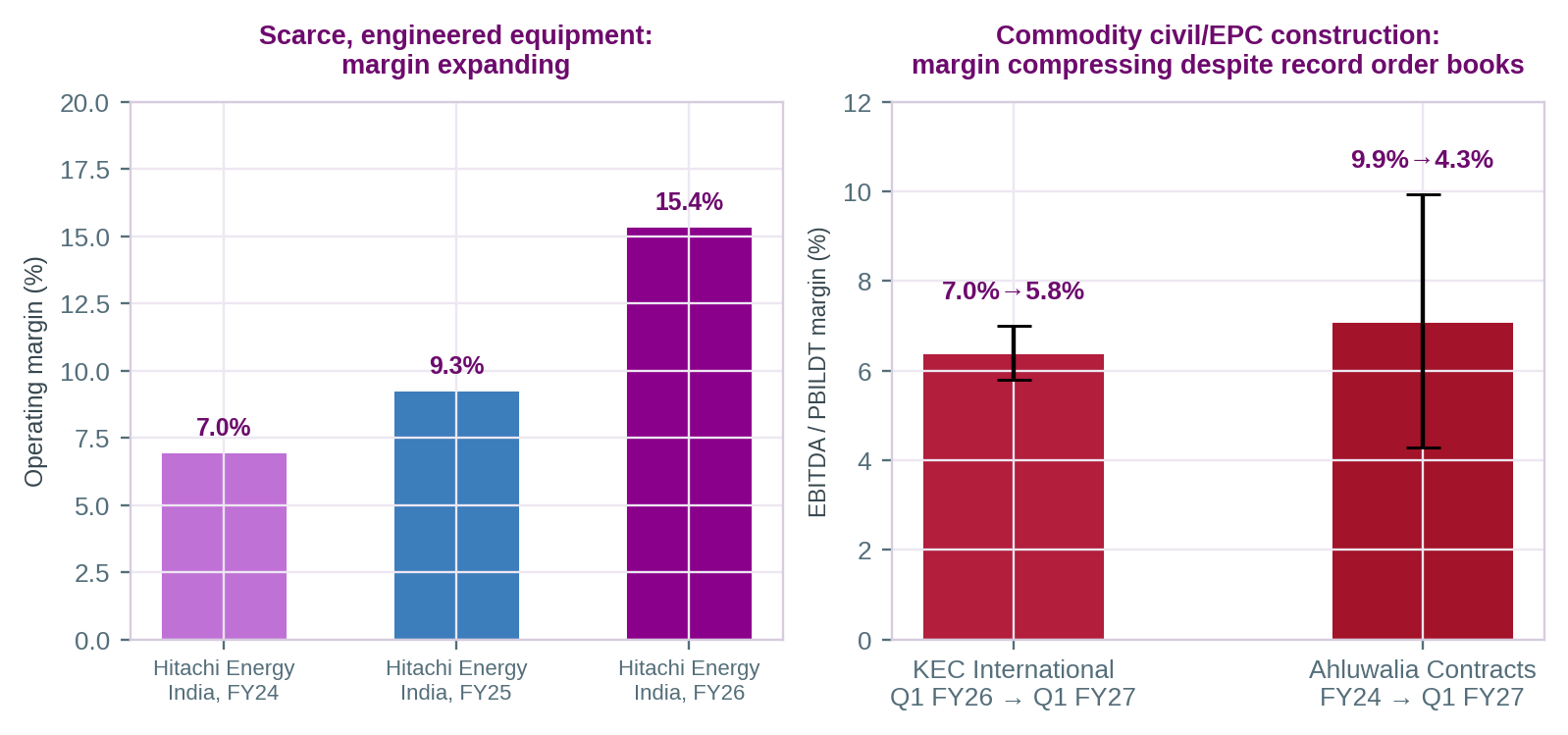
Three reasons the hard half does not scale the way the easy half does — and one honest structural difference from this report's sister volume on the AI compute stack, worth stating plainly before going further.
A completed building's success criterion is an inspection you pass today. A power or cooling system's success criterion is the absence of a failure that would only show up after months of sustained peak load — a transformer hot-spot that shortens its working life, a chiller plant that cannot hold its target temperature once every rack in a hall is running flat out during a summer heat wave. You cannot inspect your way to confidence here; only running the system hard, for a long time, tells you whether the engineering was actually sound.
A Tier III/IV facility does not earn its rating once and keep it forever — redundancy has to actually function correctly every time it is tested, and equipment ages, degrades and eventually needs replacement without ever taking the facility below its rated redundancy level during the swap. There is no equivalent of "the building still meets code because it did on day one" in this industry's power and cooling layer; staying qualified is a continuous, not a one-time, obligation.
Dart Consultants' AI compute-stack primer found a single company — Nvidia — setting the qualification bar and effectively rationing chip allocation for that entire industry. This report's research found no equivalent single gatekeeper for data-centre physical infrastructure. Instead, scarcity here is a genuinely diffuse, global capital-equipment manufacturing-capacity constraint — reported multi-year lead times for large power transformers and gas-insulated switchgear in several global markets — layered on top of a fragmented set of domestic approvers (state electricity boards, the Central Electricity Authority's grid codes, state-level industrial and data-centre incentive policies) with no single body granting or denying access the way Nvidia's own certification programme does. This makes the scarcity in this report slower- moving and harder to reverse quickly — a transformer manufacturer cannot conjure a new production line the way a server assembler can add a shift — but it also means no single partnership or relationship unlocks allocation the way an NVIDIA-certified partnership does in the sister report. Readers should not expect this report's company-level evidence to mirror that report's Nvidia-centric structure one-for-one; it does not, and forcing that comparison would misstate what this research actually found.